Spring Serenity
It’s hard to feel there’s a greater balm for the heart and soul than the arrival of spring after a long winter filled with blizzards and frozen bays. I’m on my back porch—just a few minutes shy of nine a.m. I’ve said my prayers, did a little breathwork, sat for meditation, and now I can’t help but take in the sunshine and bird song. A slightly stinging cool breeze still stirs from the east sending a shiver up my neck. There’s a tingling numbness to my fingertips, but oh does this morning sun shine strong. My face radiates with warmth and I have to squint my eyes in a half smile just to sit here and write.
What an honor to feel and be witness to the dualities of transition—winter’s chill still clinging out over the Atlantic and summer’s sun beginning to bathe the backyard. The liminal phases of the year offer such a lift in our being. Like plants acclimatizing to the seasonal changes we also tenderly begin to poke our heads out the window to breathe the fresh air. We may lay our feet bare on the sand for the first time in many moons and perhaps even dare a dip in the sea.
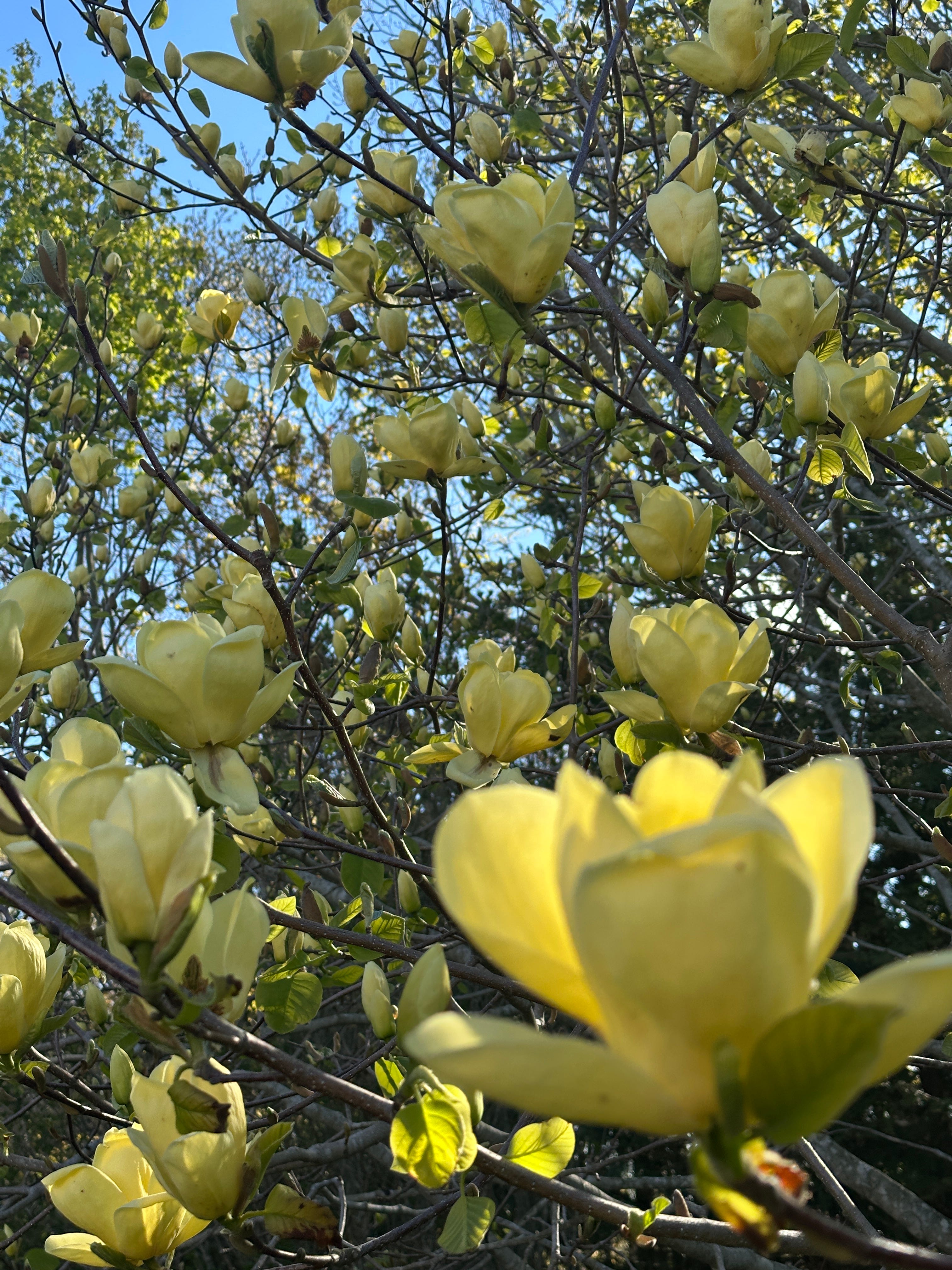
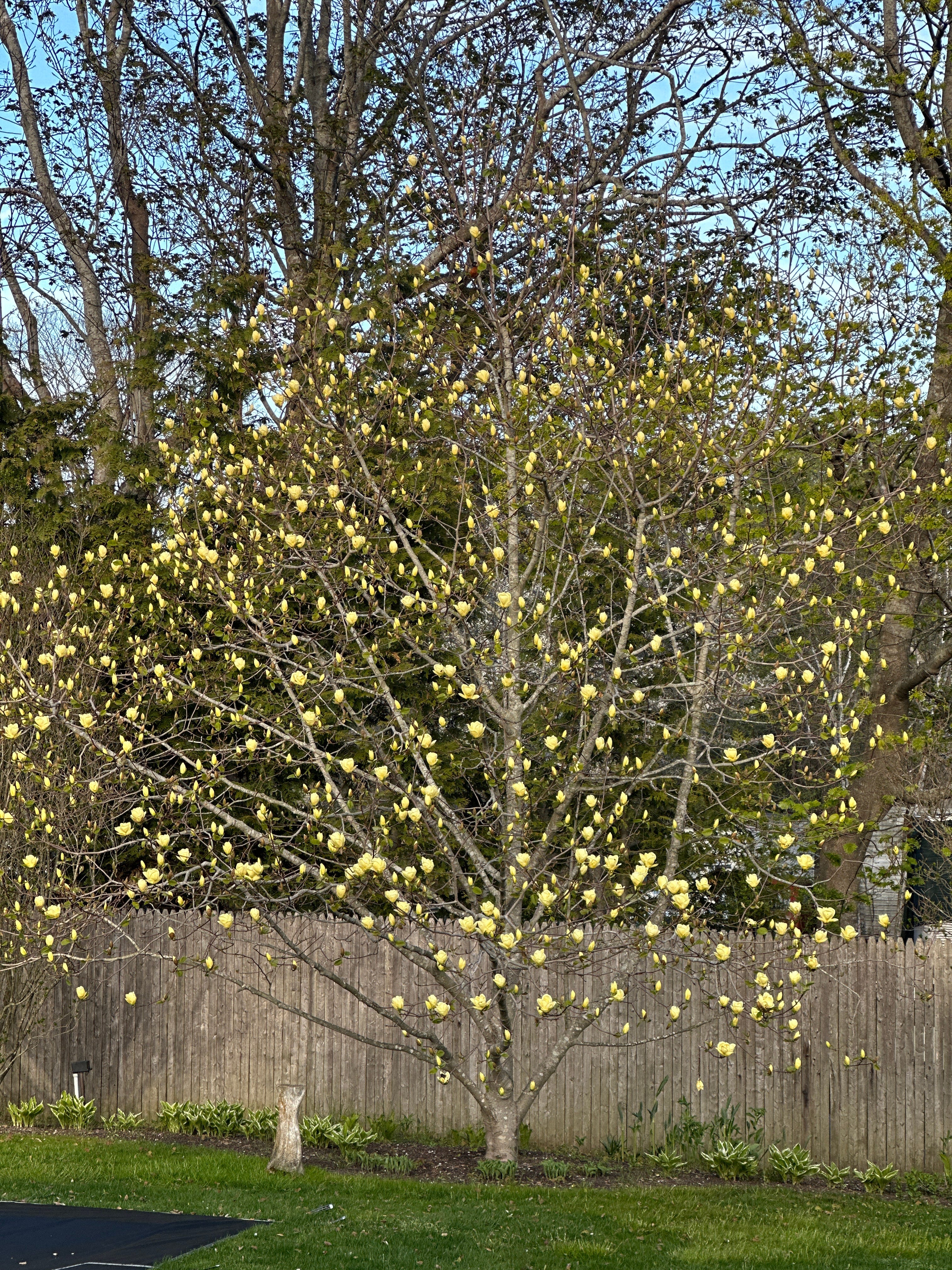
A late blooming yellow Magnolia rules and oversees the backyard. Her branches and flowers reaching skyward like a pointed crown. During dusk and in the heavy moonlight her petals glow with an iridescent luminosity that I have not known before. She seems the rightful queen this time of year—taking post and announcing herself so splendidly in a thrash of colors all over town. Her young, eager, and blushing niece, the Cherry Blossom, has already made her full showing. We have one here as well, but she’s not ours. She creeps and likens over the back fence from the other side—the junkyard our yard butts up to. Splendidly and luckily enough for us her branches reach north—every time a breeze floats through she shimmies releasing the most delicate of dusty rose-white petals fluttering across the lawn.
Last spring I was in Japan for the first time celebrating my thirtieth birthday. I hadn’t known or felt a spring in many years, but I must say, there seems no spring I could imagine that surpasses Japan’s. You might say a large part of their culture resides in their acuity to spring’s transformations, it’s delicate and subtle transitions. Of course there is the famous Sakura—the cherry blossoms’ bloom marked by a short lived ephemeral beauty, where all generations of Japan flock to the parks and riversides to picnic and have their picture taken under the delicate branches. But this is only one of Japan’s seventy-two microseasons. After 櫻始開 (Sakura hajimete saku) first cherry blossoms comes 雷乃発声 (Kaminari sunawachi koe o hassu) distant thunder and then 玄鳥至 (Tsubame kitaru) swallows return. Each week there is a blossoming, a returning, or a transformation to note and observe keenly tying the people and culture to the land. This was not simply a pleasantry but a way of keeping time in accordance with the natural world. It’s a practice of rooting ourselves deeply into our mothership.
I laugh to myself considering how much admiration I have for this type of knowledge and coherence and yet I know few of my local species. We garden, we grow flowers and herbs, but can I set myself on a walk and know the beach plumbs are ready or recognize the distinctive bud on a late blooming tree?
I grew up in what I, and many perhaps, believe is one of the most beautiful places on the east coast of the United States. A jutting, splitting, spiraling twist of bays, inlets, and beaches. Surround by water on all sides in some way. The light, oh the light— incomparable. It truly is. I’ve been all over the world and I have yet to see a sunset and quality of light that surpasses that which dawns and dies each day on the eastern tip of Long Island. It’s the light that brought numerous artists here seeking solitude and inspiration. It’s the beaches, bays, and flat fertile souls that settled Bonackers here for generations. And to only imagine this land tended in all it’s glory by the Shinnecock and Montaukett before being divided by conquest and parcel.
The land upon which we sit is still the reason people flock here, still the underlying draw, but I fear we’ve all lost sight of the miracles that abound underneath our feet and above our head. To think that there’s enough change roughly every five days all year long to name a microseason for each minute transformation. How wildly radical and beautiful is that? I’d like to believe there are some people in Japan who pride themselves on knowing each one by heart—who adhere to the calendar marked in the soil rather than the one on a screen.
As my breath reach towards the rising warmth of this day and the season to come I’m reminded to move slowly, tenderly through this land and seascape—to take care to notice the ground upon which I was raised and still happen to stand.